Following the discussion on defence M&A at this year’s Baltic M&A and Private Equity Forum, the topic of private capital entering the sector continues to gain relevance. Wolff van Sintern, partner and co-founder of ETNA and a panellist at the forum, shares his perspective in an interview with Dienas Bizness on the role of private investors, the position of the Baltics and the sector’s development. The article also features commentary from Laimonas Skibarka, partner and member of the Defence sector group at Sorainen.
A few years ago, the European defence sector was largely seen as a state-funded, politically driven field, but now there is increasing activity from private capital.
This is highlighted in an interview with Dienas Bizness by Wolff van Sintern, partner and co-founder of the private equity investment fund ETNA, which is dedicated to the defence sector. He emphasises that, despite their small economic scale, the Baltic States stand out in the defence sector for their high level of innovation, strong understanding of security challenges, and favourable environment for business development, which enables them to compete successfully in the international market. Van Sintern is convinced that Baltic defence technology companies need to think on a broader scale, as their market is not limited to neighbouring countries but extends to all NATO members and beyond.
What are the main reasons for the growing interest of private capital in the defence sector?
Firstly, for a long time, investment in the defence sector was limited by a lack of regulatory support. Secondly, the sector itself was not particularly active – there were no significant buy-and-sell transactions or rapid market growth. No significant changes followed even after the annexation of Crimea, which took place more than 10 years ago. Even then, the defence sector did not develop as rapidly as had been expected. A similar situation was observed in Germany – there was much talk of changes in security policy, but in practice, nothing happened for a long time, as implementing decisions at this level takes time. The sector has now become more active, giving the impression of a rapid breakthrough, but in reality, the groundwork for its development has been laid over several years.
ETNA recently made its first investment in the Baltics, investing in the Lithuanian defence technology group Brolis Defence Group. Why the Baltics specifically, and why now?
The economies of the Baltic States are small compared to Germany or France, but this region is very active in the defence sector. Brolis is just one example, but the broader context is also important – there is a high level of awareness of geopolitical processes in the Baltics, which creates a favourable environment for the sector’s development. This is driven by proactive government policy, companies’ desire to develop new solutions, and public support. This combination of factors is particularly significant for companies seeking to attract talent and grow rapidly. The timing of the investment, in turn, was largely determined by the fund’s own development. ETNA began full-scale operations last December, and we had already begun evaluating potential investment opportunities. The contact with Brolis came about through a colleague of mine, who introduced us to the company’s founders – three brothers, the Vizbarases. Following this meeting, our collaboration began, which later developed into an investment deal.
What were the main criteria you considered when deciding whether to invest in Brolis?
The first aspect we always assess is the company’s performance. Brolis is a financially strong company with high-quality products, professional management, and clear growth potential. We saw strong market demand for the company’s technologies, which provide a solid foundation for future growth. Another key factor was the founding team, which had already proven its ability to build and develop a successful business. Brolis’s operations are underpinned by strong technological expertise, and we saw extensive opportunities for us to jointly develop the company and accelerate its future growth. In addition, it is worth noting that Brolis has recently signed several significant contracts, including with the Danish and Belgian armed forces and other major public-sector clients. These contracts have significantly contributed to both revenue and profit growth, and provide a solid foundation for future development. Overall, we saw a well-managed company with a strong technological base, a proven track record of growth, and significant future potential.
You have previously noted that the main market for the defence sector is currently NATO Europe, rather than the economies of individual countries. What does this mean for Baltic companies seeking to expand internationally?
From a geopolitical and military perspective, the Baltic States are currently at the very epicentre of events. It is no coincidence that the forces of many NATO countries are deployed in the region and that significant defence projects are being implemented. From NATO’s perspective, the Baltic States are not on the periphery of Europe; they are an essential part of Europe’s security architecture, and this creates opportunities for local companies too. Of course, to reach the next level of development, capital and investment are needed, and this is precisely where we see our role. ETNA aims to help defence companies secure the resources necessary for international growth, and to strengthen their competitiveness on a European scale.
In your opinion, what characterises Baltic defence companies that are able to compete successfully in the NATO European market?
I wouldn’t say there are any specific criteria for the Baltics here. We are looking for companies with strong products, a clear technological advantage and the ability to develop on an international scale. In the defence sector, companies usually have close ties with their country’s defence structures, including the army, the ministry of defence, and other security-sector representatives. Often, these become their first customers and help the company develop products based on real-world needs. The Baltic States have several advantages in this regard. The region has close ties with Ukraine and a good understanding of events on the front line. This allows companies to obtain rapid feedback, better understand the needs of modern warfare, and develop products that meet current requirements. In our view, Baltic companies are also characterised by a strong focus on innovation. Decisions are made quickly, and companies can adapt flexibly and drive new projects forward. A well-developed business infrastructure is also important – banks, auditors, consultants, and legal and financial services. The strong support from the government, the business environment and society must also certainly be mentioned. If all these parties view the sector’s development as a priority, this creates favourable conditions for investment and fosters the emergence of new success stories.
What is currently the main constraint on the growth of Baltic defence companies?
To be honest, we do not view the Baltic States as a region significantly constrained by any structural barriers. Of course, the national markets are relatively small, but we have never viewed, for example, Brolis as a Lithuanian company serving only Lithuanian customers. We see it as a Lithuanian-based company with a market across NATO Europe. If a company has a competitive product and a clear development strategy, its target market is not just the local market. Any company – regardless of whether it is based in Lithuania, Germany, Italy or Spain – must be able to win tenders, attract customers and secure new contracts. This is a normal business reality, not a problem specific to the Baltic States.
You have mentioned NATO Europe on several occasions – can local defence companies also develop within the wider NATO area?
Yes, of course. The potential market covers the entire NATO area, including Canada and the United States, but entering these markets is not straightforward. For example, to succeed in the US defence sector, a good product alone is not enough. Becoming a trusted supplier requires sustained and focused effort, relationship-building, reputation-building and an understanding of the requirements of that specific market. It is not impossible, and we certainly see such potential, but it is a gradual process. Companies must build their presence gradually and demonstrate their ability to deliver high-quality solutions on an international scale. It is precisely in this way that it is possible to successfully reach the wider NATO market beyond Europe.
In the defence sector, we often hear the phrase “battle-tested” or “a solution tested in combat conditions”. From an investor’s perspective, what does this actually mean?
In our view, at present the most convincing proof that a product works is when the Ukrainian armed forces want to receive and use it repeatedly. Long-term cooperation and repeat orders demonstrate that the solution genuinely creates value. As investors, it is important for us to see not a one-off delivery or donation, but a long-term relationship with the user. If the collaboration continues for years, with regular communication, feedback received, and the product refined to meet real-world needs, this confirms that the company is capable of creating solutions that work in practice. The current war in Ukraine is a concrete environment in which defence technologies can prove their effectiveness.
Of course, technologies can also be tested without war, but doing so is not entirely comparable to real combat conditions.
Are Brolis products also being tested in Ukraine?
Yes, Brolis operates in the Ukrainian market, and that’s no secret. Generally speaking, many companies are currently working with Ukraine, and many claim their products are battle-tested. However, not everyone understands this term in exactly the same way. As I mentioned earlier, a true test in combat conditions does not involve merely the delivery or use of a single product in a specific situation. True value is created when a company maintains long-term cooperation with users, receives regular feedback, and constantly improves its product. At the same time, it should be noted that some companies deliver a single batch of a product and then claim the solution has been battle-tested. That is why there are different levels to this concept, and from an investor’s perspective, what matters is not the label itself, but the actual and sustained use of the product, as well as its refinement in practice.
Based on your experience, when is it worthwhile for a defence sector company to continue developing independently, and when is it more sensible to seek an investor or strategic partner?
To be honest, there is no single answer – it all depends on the specific situation. In the defence sector, procurement cycles are relatively long, as products must undergo testing, meet regulatory requirements and be fully ready for use. From the company’s perspective, this means securing sufficient financial resources for product development, increased production capacity, and growth. If a company has access to capital, it can enter new markets, invest in research and development, and expand its operations; in such cases, it is worth maintaining independence and developing autonomously. Conversely, if it becomes clear that available funding may run out before the product reaches the market or a contract is secured, it is advisable to consider bringing in an investor or strategic partner. This allows you to retain your technology and expertise whilst becoming part of a broader defence supply chain. Similarly, companies should not overestimate the pace of public procurement. Although processes are becoming faster, defence procurement can still take two to three years, and even then, there is no guarantee that a contract will be secured. Moreover, governments tend to reschedule or postpone procurements. Companies must therefore plan their financial needs in good time and ensure they have sufficient reserves to weather such periods.
Speaking of the future – where do you see the greatest potential for investment and corporate acquisitions in the defence sector?
Predicting the future is always difficult, and the honest answer is: I don’t know. However, we are seeing very active startup activity and rapid technological development. There are also companies developing niche technologies that, even at a relatively early stage, are attracting the interest of larger market players. For example, the Latvian company Ammunity: a small ammunition manufacturer that was acquired by a larger company, which recognised the technology’s potential and the opportunity to develop it more rapidly within its own ecosystem. As a result, the company’s growth accelerated significantly following the deal. I believe that in the future, deals of this type will become increasingly common – large companies will acquire smaller technology developers to gain access to innovation, expertise and new products. Similarly, so-called add-on acquisitions, where companies acquire smaller market players to expand their product range, gain new technologies or accelerate growth, will also play an increasingly significant role. However, it is currently difficult to make precise forecasts for specific segments or countries. The European defence market is not homogeneous – different countries differ in their understanding of security challenges, the speed of decision-making and investment priorities.
How would you describe the role of private capital in the European defence sector over the next two to three years?
In my view, this process is only just beginning. One of the main reasons we founded ETNA was to attract private capital into the European defence sector. Until now, this model has not been widespread. Of course, there were individual investors and funds operating in this field, but compared to the US, this is still a relatively new direction in Europe. In the US, the defence sector is one of the standard investment segments for private equity investors. In Europe, this approach is only just taking shape, so I expect that in the coming years, both the number of specialised funds and the level of private equity interest in defence technologies and companies will grow. We ourselves plan to continue developing ETNA, and I believe that other investors, including some of the major international private equity funds, will follow a similar path. Overall, a new investment environment is currently emerging in Europe, where private equity is becoming a significant source of funding for the defence sector’s development.
What should Baltic defence companies focus on to become an attractive investment opportunity in the eyes of investors?
The most important thing is to establish a company with a clear business model, sustainable revenue and professionally organised operations. The second key aspect is the ability to think beyond the local market. The local market can be a good starting point, but companies must view themselves as European players with customers across Europe and even globally. It is important to develop products and production capacity in line with European demand and defence needs. If a company has a strong foundation, a clear growth strategy and ambition, then investors, including ETNA, can help scale the business and accelerate its development. It is precisely in these companies that we see the greatest potential.
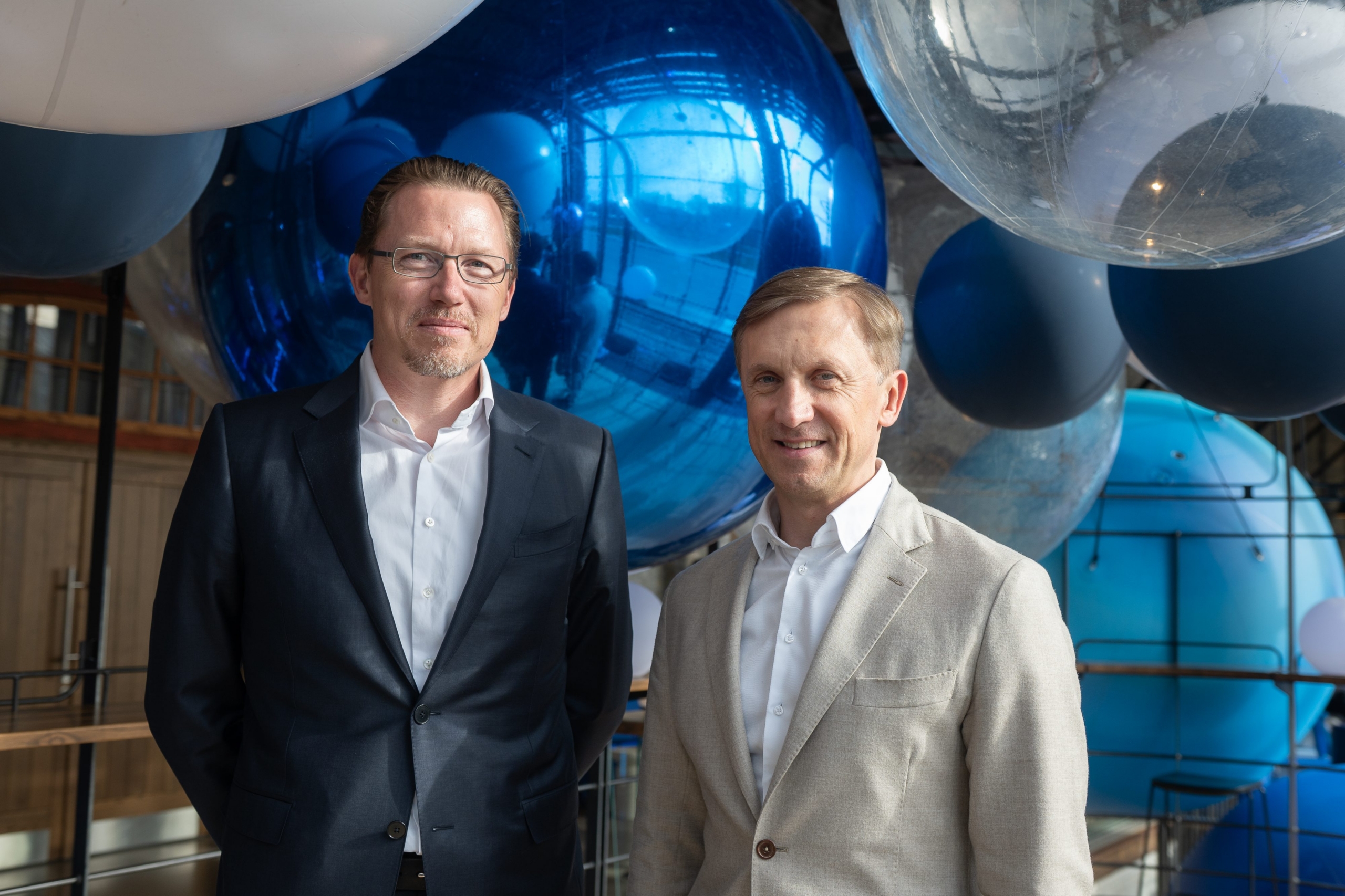
Commentary: The European defence sector needs greater consolidation
Laimonas Skibarka, partner and member of the Defence sector group at Sorainen, noted that defence spending by NATO member states in Europe is growing rapidly. This is driven both by NATO’s target of allocating 3.5% of GDP to core defence spending and the European Union’s ReArm Europe initiative, which aims to mobilise up to EUR 800 billion in additional defence investments, including EUR 150 billion in SAFE loans. As a result, the order books of European defence companies are expected to grow significantly as early as by the end of 2026, as well as in the years that follow.
At the same time, the European defence sector needs greater consolidation to compete more effectively in the global market.
Currently, only two European companies – BAE Systems and Thales – rank among the world’s top ten defence firms. Rheinmetall, which has a strong presence in both Latvia and Lithuania, ranks only 18th. To strengthen competitiveness, mergers and acquisitions will play an increasingly important role. Their frequency is already growing in the European defence sector: from 12 deals in 2023 to 30 deals in 2025; however, when compared to technology, energy, or other active sectors, growth potential is still significant.
In the context of NATO’s eastern flank, the Baltic States stand out for their particularly high level of activity. Of the 12 defence sector deals recorded in this region between 2021 and 2026, half took place in the Baltics.
Although the number of defence technology companies and startups is growing rapidly in the Baltic States, many face growth challenges: limited access to capital, relatively small local government contracts, complex supply chains, and difficulties attracting and retaining qualified specialists.
At the same time, close cooperation with Ukraine offers a significant advantage to companies in the Baltic and Central European regions. Practical experience and technologies tested in real combat conditions are becoming a key competitive advantage in international markets.
To fully capitalise on these opportunities, cooperation with investors – both private equity funds and strategic partners – is becoming increasingly important for companies. This allows them not only to attract the necessary funding but also to enter international markets more quickly and to expand production capacity. The investment climate is currently favourable, as major players in the defence sector are actively seeking opportunities to acquire new technologies and expand production capabilities, while private equity interest in the sector continues to grow.
The interview, conducted by Armanda Vilciņa, was published in the 2 June 2026 issue of Dienas Bizness.