Despite continued geopolitical and macroeconomic uncertainty, the Baltic M&A market remained active in 2024–2026. Technology regained its position as the leading sector, strategic investors strengthened their role as buyers, and the share of transactions valued above EUR 50 million increased. At the same time, deal processes are taking longer.
These are among the findings of the ninth Baltic Private M&A Deal Points Study, which analyses 198 private M&A transactions completed between April 2024 and March 2026. The study covers transactions involving targets operating in Estonia, Latvia or Lithuania, with a deal value of at least EUR 1 million.
Toomas Prangli, partner at Sorainen and the study’s project lead, sees the return to larger transactions and the growing number of founder-led exits as signs of renewed activity in the Baltic M&A market.
Technology regains its position as the most active sector
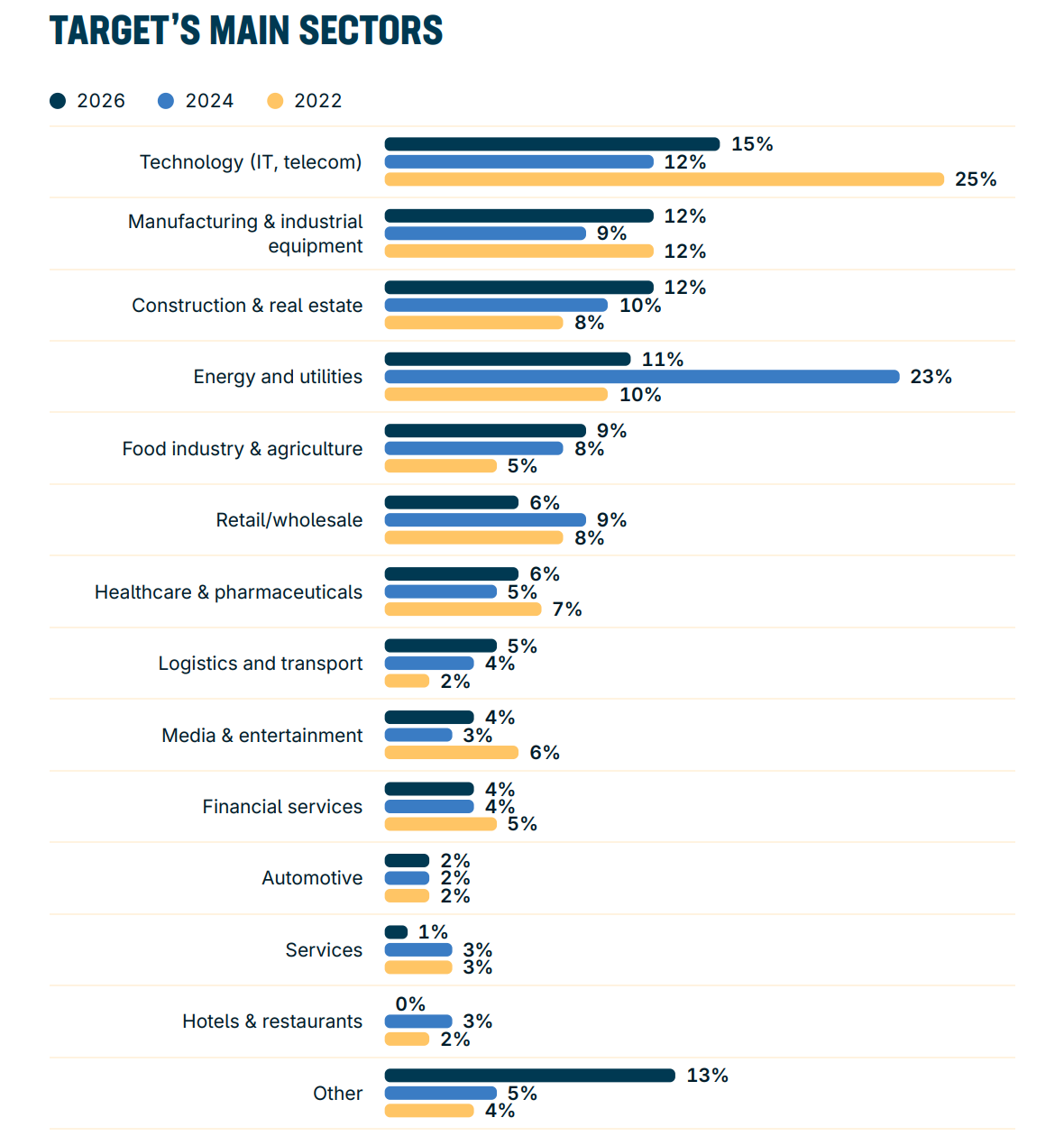
Technology, including IT and telecommunications, accounted for 15% of the transactions analysed, up from 12% in the previous study. It has therefore regained its position as the most active M&A sector in the Baltics.
Energy and utilities, which led the market in the previous study period, with a 23% share, fell to 11%. The energy sector’s decline likely reflects reduced activity amid considerable political and regulatory uncertainty about the future.
Manufacturing and industrial equipment, as well as construction and real estate, each accounted for 12% of the transactions. Food and agriculture continued to trend upwards, increasing from 8% to 9%.
Strategic investors continue to shape the market
Strategic investors strengthened their position as the dominant buyer group in the Baltic M&A market, accounting for 73% of the transactions analysed, compared with 70% in the previous study and 46% in 2022. At the same time, the share of financial and private equity buyers declined from 24% to 17%.
Baltic buyers remained at the centre of market activity. Estonian buyers remained the most active acquirers, while Lithuanian and Latvian investors also maintained a strong presence. Among international buyers, Swedish and UK investors stood out, displaying the highest levels of activity.
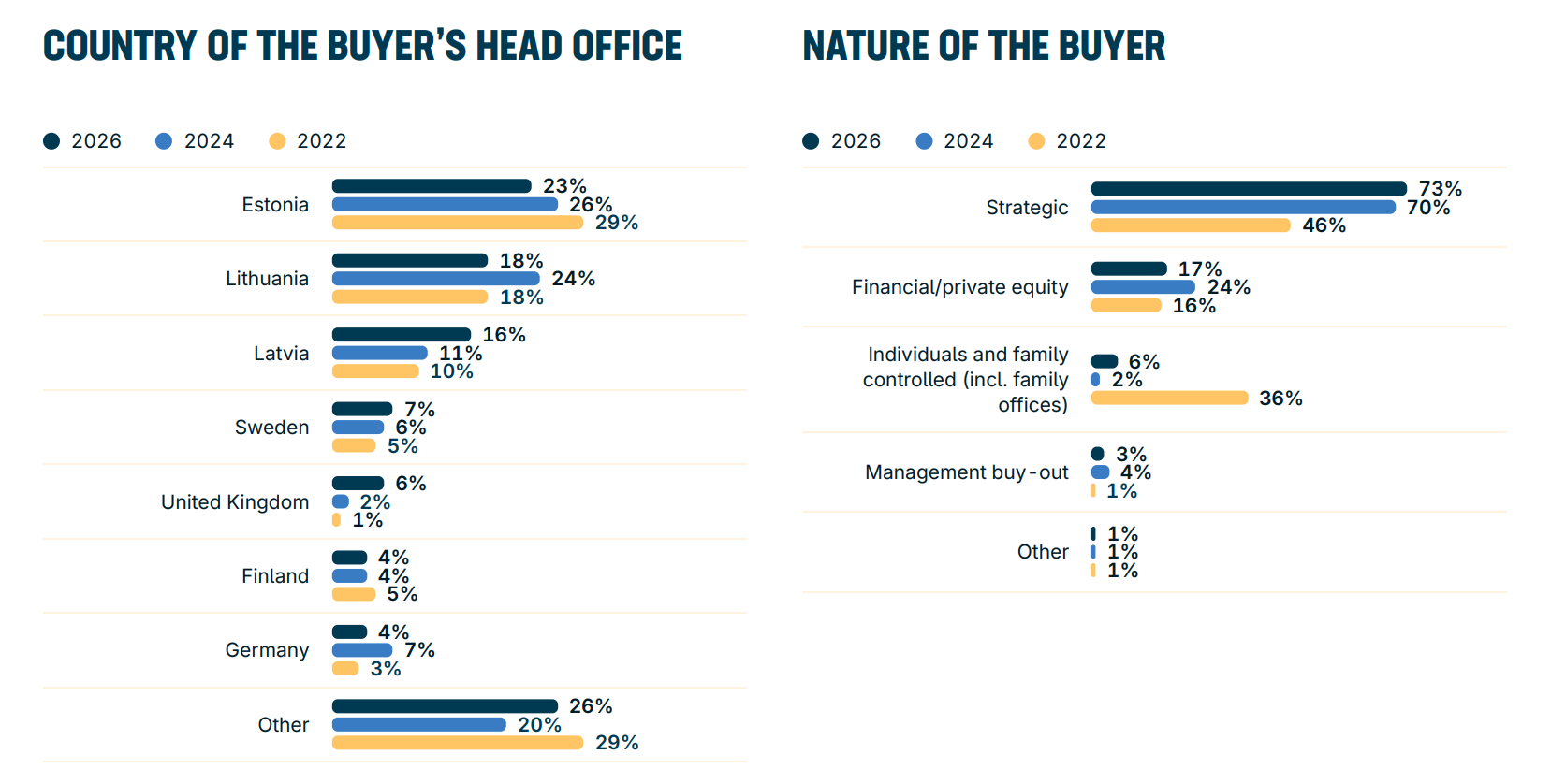
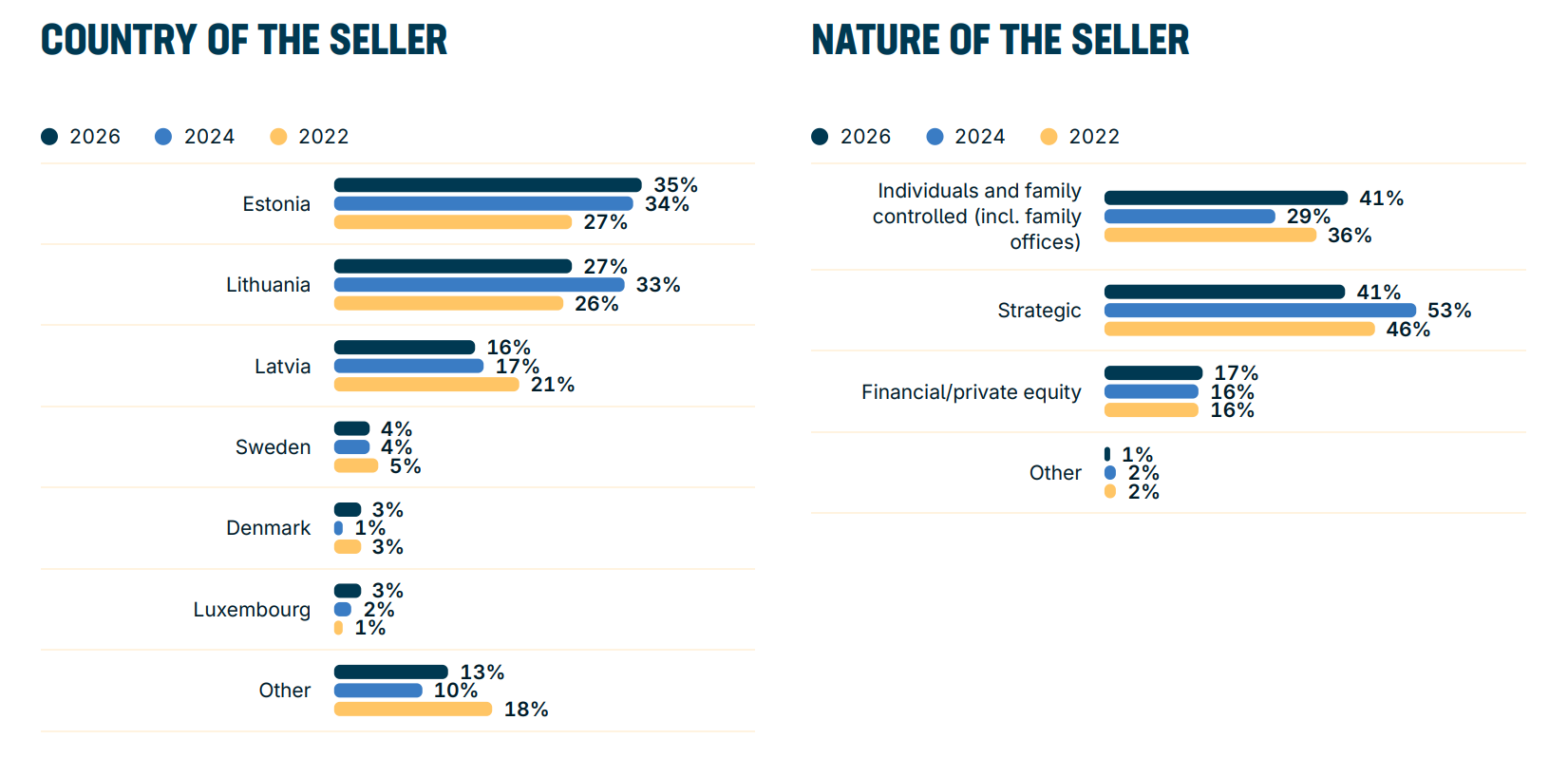
On the sell-side, the market saw a notable shift. While strategic investors were the leading sellers in the previous study period, exits by individuals and family-controlled businesses increased significantly. In 2026, both groups accounted for an equal share: 41% of analysed transactions, compared with 29% for family-controlled sellers in 2024. This points to an accelerating generational shift among Baltic business-owners.
Most transactions remain below EUR 10 million, despite a return to larger deals
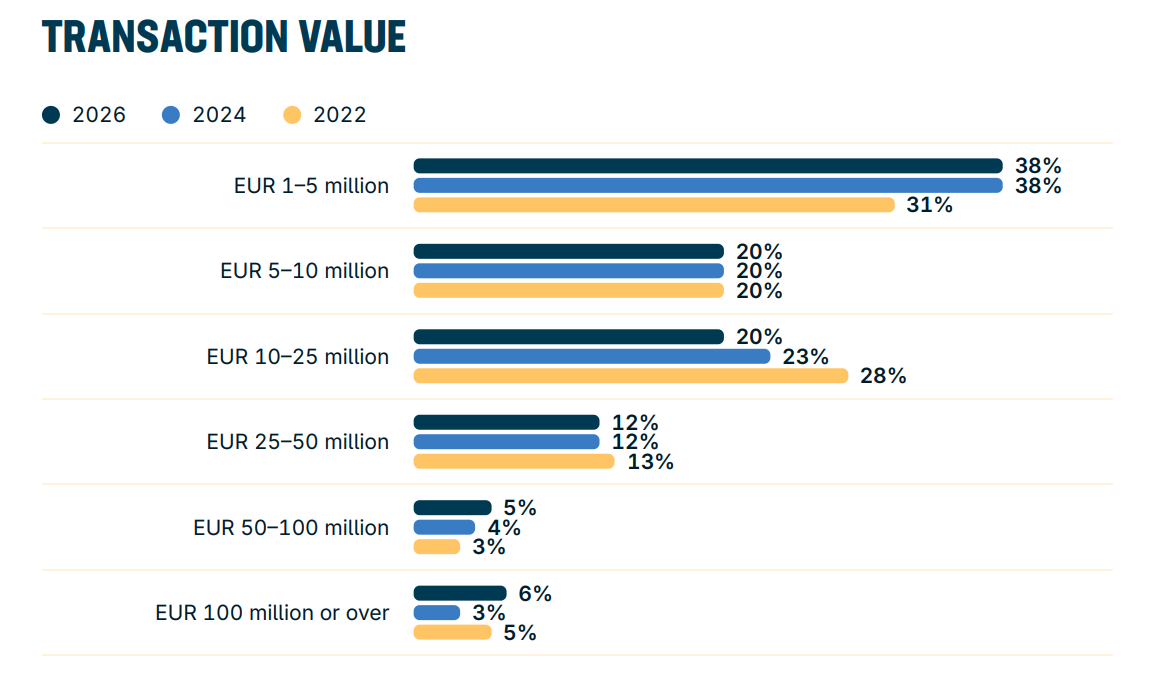
The Baltic M&A market continues to be dominated by lower mid-market transactions, with 58% of the analysed deals valued below EUR 10 million. However, larger transactions were more common than in the previous study period.
Transactions exceeding EUR 100 million doubled from 3% to 6% of the analysed sample, while deals valued between EUR 50 million and EUR 100 million increased from 4% to 5%.
Transaction processes are taking longer
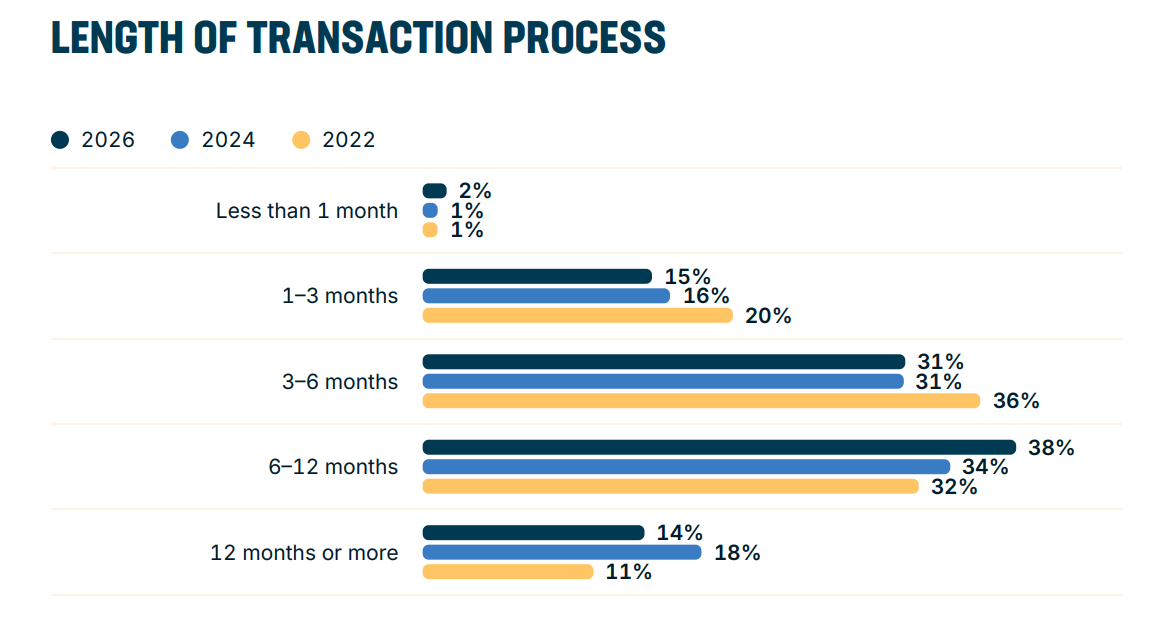
The study also points to longer execution timelines than in 2024. Transactions completed within three months accounted for 17% of the sample, as also in the previous study period. At the same time, the share of transactions taking from six to 12 months increased from 34% to 38%, and a further 14% took more than a year to complete.
The most common timeframe for completing a transaction is now between six and 12 months from the signing of a letter of intent. This highlights the importance of starting preparations early, particularly for deals involving regulatory approvals, foreign direct investment screening, extensive due diligence, or more complex negotiations and transaction structures.
Market confidence is returning, but preparation matters
Commenting on the findings, Toomas Prangli, partner at Sorainen and the study’s project lead, says: “One of the most notable shifts in this study is the growing number of founder- and family-business exits. We are also seeing strategic buyers remain highly active and larger transactions return to the market. For business owners considering a sale, the window of opportunity is clearly there, although it remains a buyer’s market. At the same time, transactions are becoming more demanding to execute and often take longer to complete, placing greater emphasis on preparation, timing and thorough due diligence for both buyers and sellers.”
The ninth edition of the study was conducted with contributions from Sorainen, Ellex, Tegos, Walless, Cobalt, Eversheds Sutherland and Triniti, under the auspices of the Estonian, Latvian and Lithuanian private equity and venture capital associations.
If you have any questions about the study or the Baltic M&A market, please contact our Corporate and M&A team, the study’s project lead, partner Toomas Prangli in Estonia, or partners Nauris Grigals in Latvia and Mantas Petkevičius in Lithuania.
Read the full Baltic Private M&A Deal Points Study 2026 ↓
Available in landscape (screens) and portrait (mobile) formats.