Based on preliminary data as of 10 December, in 2025 the Baltic M&A market slowed down a bit by deal count (-19% compared to the same period of 2024), but has already surpassed the full-year level of 2023, by 16%. This year’s impressive leap in the total announced deal value (+47%, nearly reaching the record level set during the full year 2021) has been largely driven by foreign investors. The three largest deals, all carried out by foreign buyers, contributed as much as EUR 2.46 billion – compared to EUR 1.21 billion in the full year 2024, when two of the three top deals were carried out by Baltic buyers. Against a background of uncertainties over international trade, and wars in Ukraine and Gaza, the Baltic M&A market has demonstrated true resilience this year.
Sums of disclosed values of announced M&A transactions
in the Baltics (Lithuania, Latvia, Estonia) in 2021–2025[1]
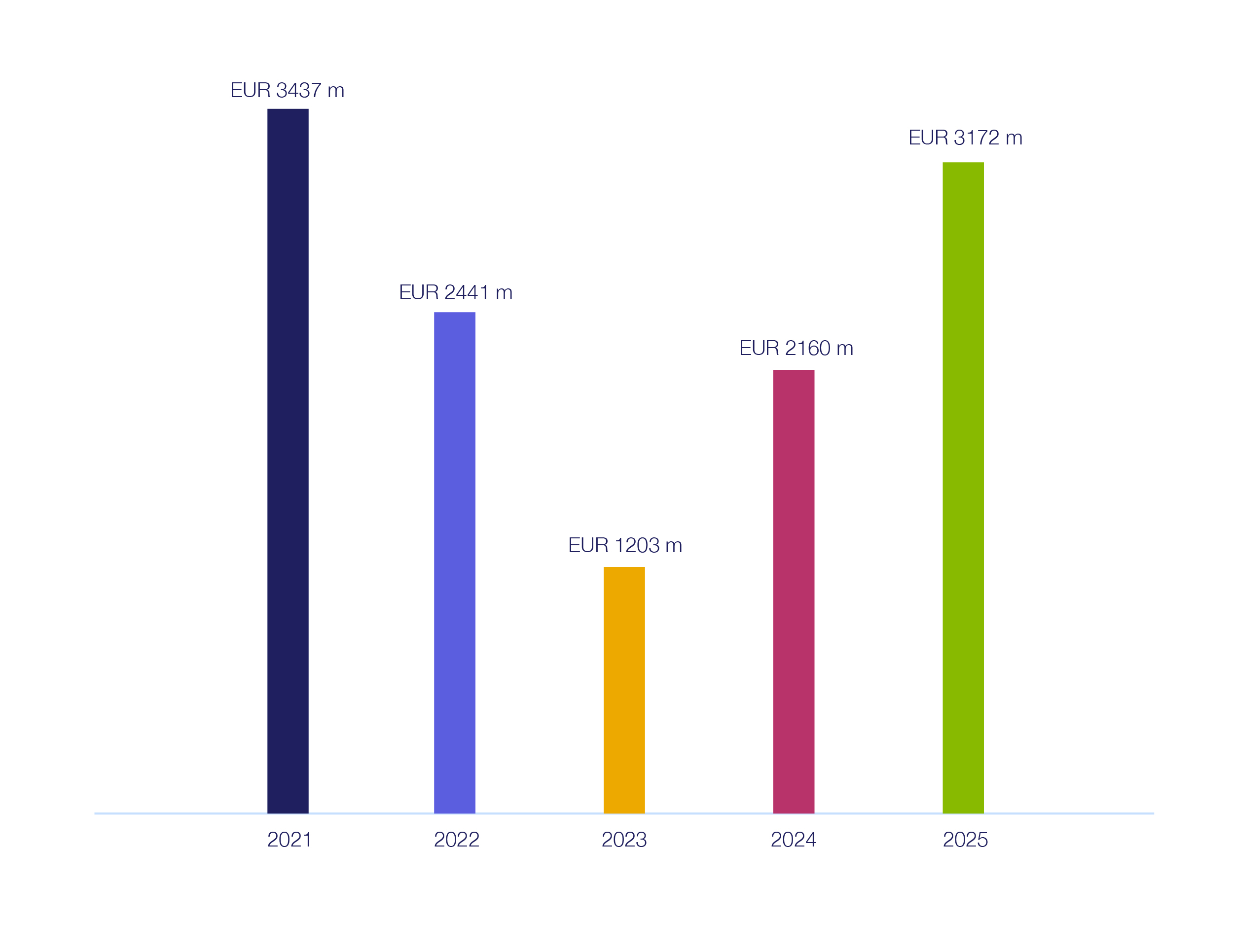
[1] The numbers for 2024 and 2025 include the transactions announced during 1 January – 10 December each year, i.e. not a full year.
Source: Mergermarket
Number of announced M&A transactions[2] in the Baltics
(Lithuania, Latvia, Estonia) in 2021–2025[3]
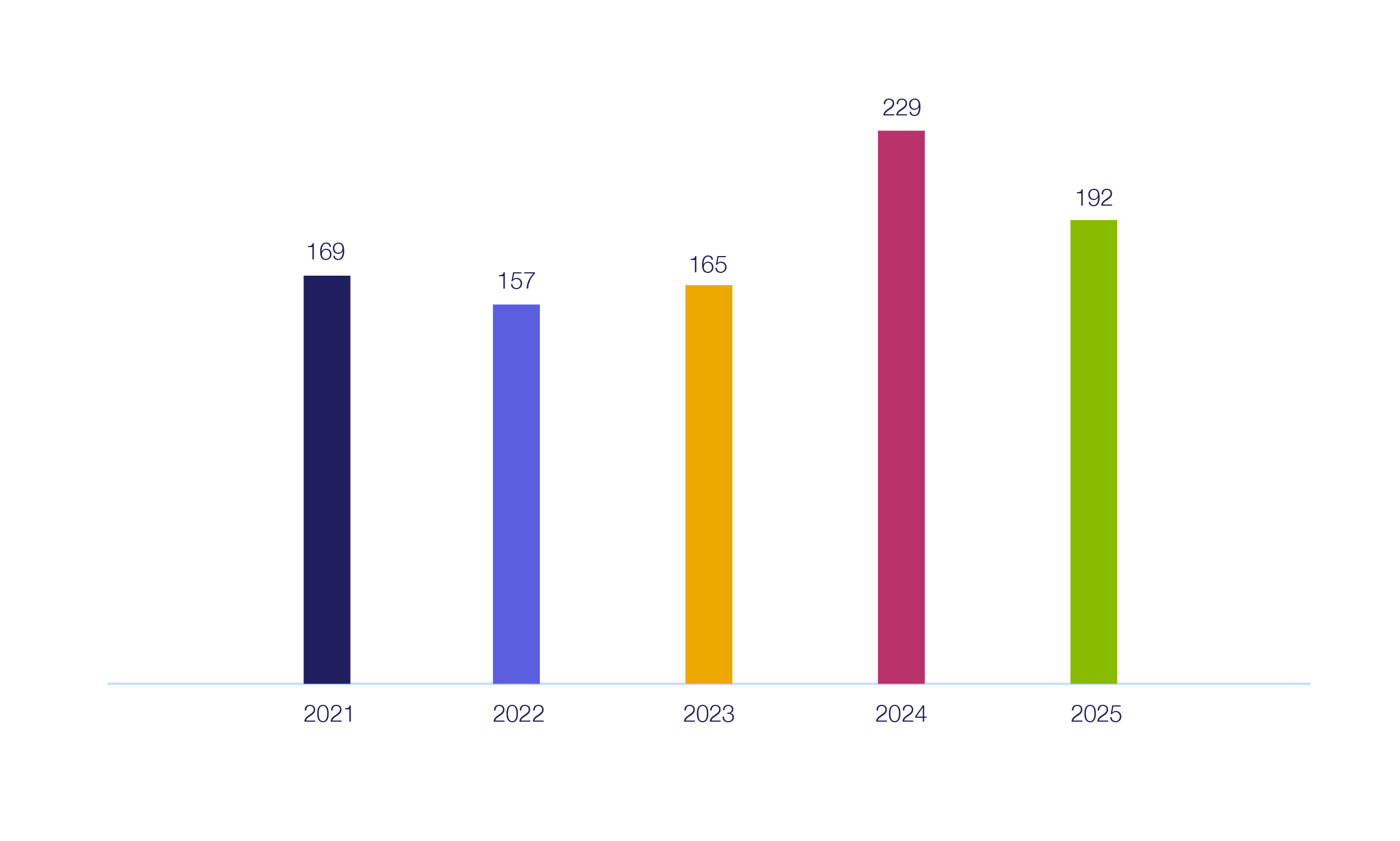
[2] We note that until the end of 2022 Mergermarket statistics included only higher value transactions (normally exceeding USD 5 million), but the deal criteria changed from 2023 which resulted in a certain increase of reported transactions.
[3] The numbers for 2024 and 2025 include the transactions announced during 1 January – 10 December each year, i.e. not a full year.
Source: Mergermarket
2025 marks a surge in pan-Baltic mega deals
The year kicked off with the largest Baltic deal of the decade – Denmark’s leading food retailer, Salling Group, acquiring the major Baltic retail chain Rimi Baltic for EUR 1.3 billion. The momentum was sustained throughout 2025, as it was followed by three other “mega deals” (in Baltic terms): in August Manulife IM-backed GCI announced the acquisition of 50% of Tele2’s pan-Baltic tower business for EUR 440 million, in October Froneri signed the acquisition of the Latvian-based ice cream producer Food Union (which has operations across the Baltics as well as in Denmark, Norway and Romania[4]), and in October Ingka Group agreed to acquire forestry holdings in Latvia and Estonia for EUR 720 million, the largest forest industry deal in the Baltics to date. Importantly, all of these four mega deals involved two or all three of the Baltic States, marking a visible increase in pan-Baltic dealmaking.
Such an increase in large-scale transactions reflects the growth and maturity of Baltic companies.
[4] Though the deal value was not announced, by its magnitude this acquisition clearly qualifies among Baltic “mega deals” this year.
Top 10 M&A transactions in the Baltics by disclosed sale price in 2025*
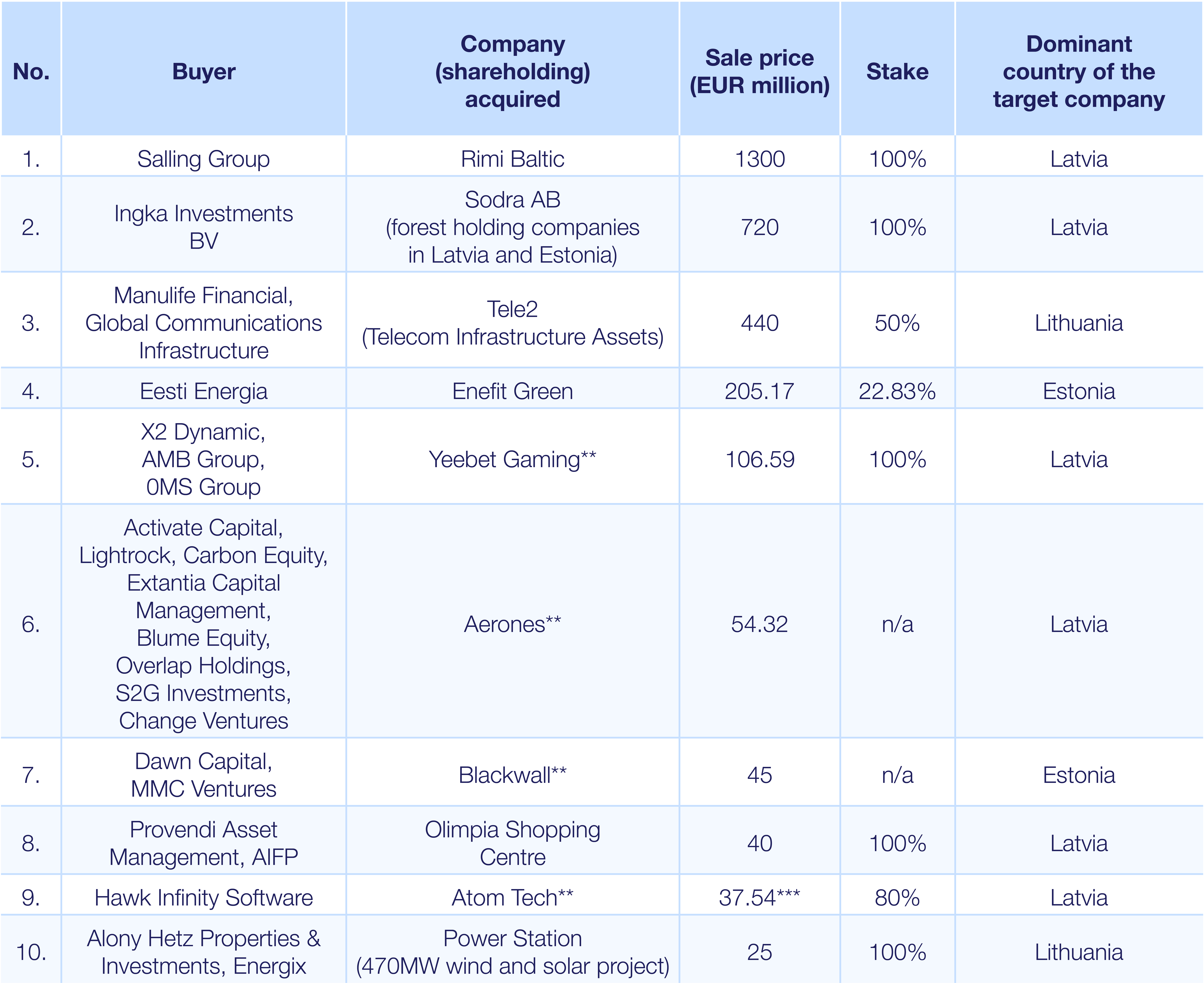
* Transactions have been allocated between countries based on “deal dominant geography” criteria in the Mergermarket database.
** Startup/scale-up companies.
*** This amount is the total price paid for the [WM1] shares in the Latvian company Atom Tech, as well as German companies Vistra GbR and Apicon GmbH.
Sector overview: stable leaders, defence on the rise
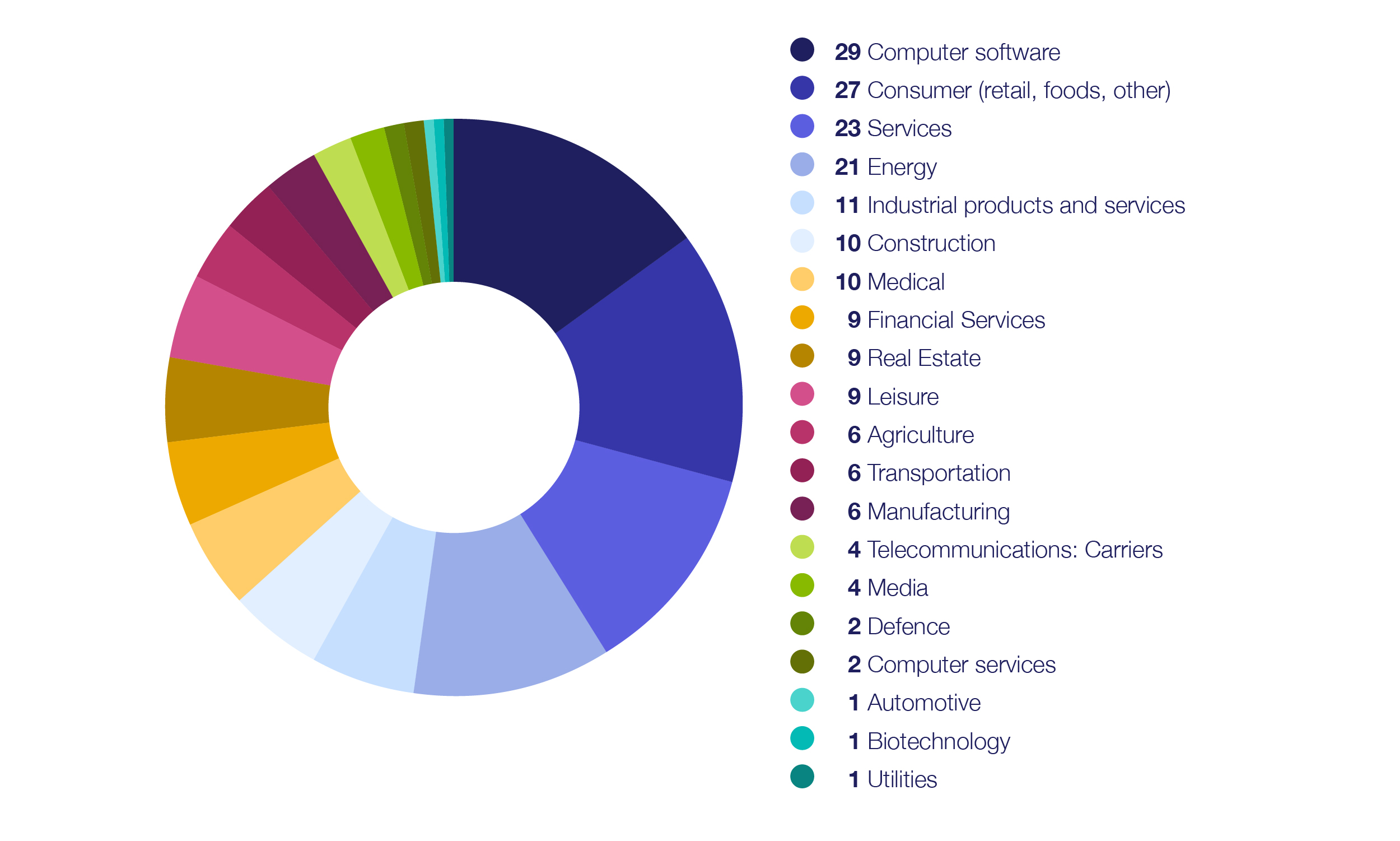
Interestingly, we can observe that the four most active sectors for Baltic M&A are the same as last year: computer software (29), consumer (27), services (23) and energy (21). However, in 2024 the order was different: with computer software first, followed by energy, services and consumer. We note that energy, computer software and consumer were among the top four sectors in 2023 as well, thus the three appear to be the key drivers of the Baltic M&A market. We have already noticed a visible increase in interest in defence companies and startups, and we forecast that this sector will make a notable contribution to Baltic M&A deal volumes in 2026.
Baltic M&A deals in 2025 by business sectors
Source: Mergermarket
Top deals signal a maturing Baltic startup landscape
Similarly to 2024, as many as four of the top ten Baltic deals by announced value involve startups and scale-ups. The Baltic startup ecosystem is again showing signs of growth. In Estonia, in 2025 the number of deals increased around 15% compared to last year and in Latvia the overall deal value has more than doubled (based on publicly collected deal data). The most notable transactions this year have been Cast AI (based in the US and Lithuania), raising EUR 95.47 million; Aerones in Latvia, raising EUR 54.32 million; and Pactum (based in the US and Estonia), raising EUR 47.34 million. There were notable exits as well: the sale of Yeebet Gaming (for EUR 106.59 million) and Atom Tech (EUR 37.54 million[5]) in Latvia, and of Intelligent Communications (Trafi) (EUR 21.03 million) in Lithuania. The growing number of startup exits is a sign of the maturity of the Baltic startup ecosystem.
[5] But this amount is a total share price paid for the shares in Atom Tech as well as German companies Vistra GbR and Apicon GmbH.
Outlook for Lithuania, Latvia and Estonia
Number of transactions by country in 2022–2025[6]
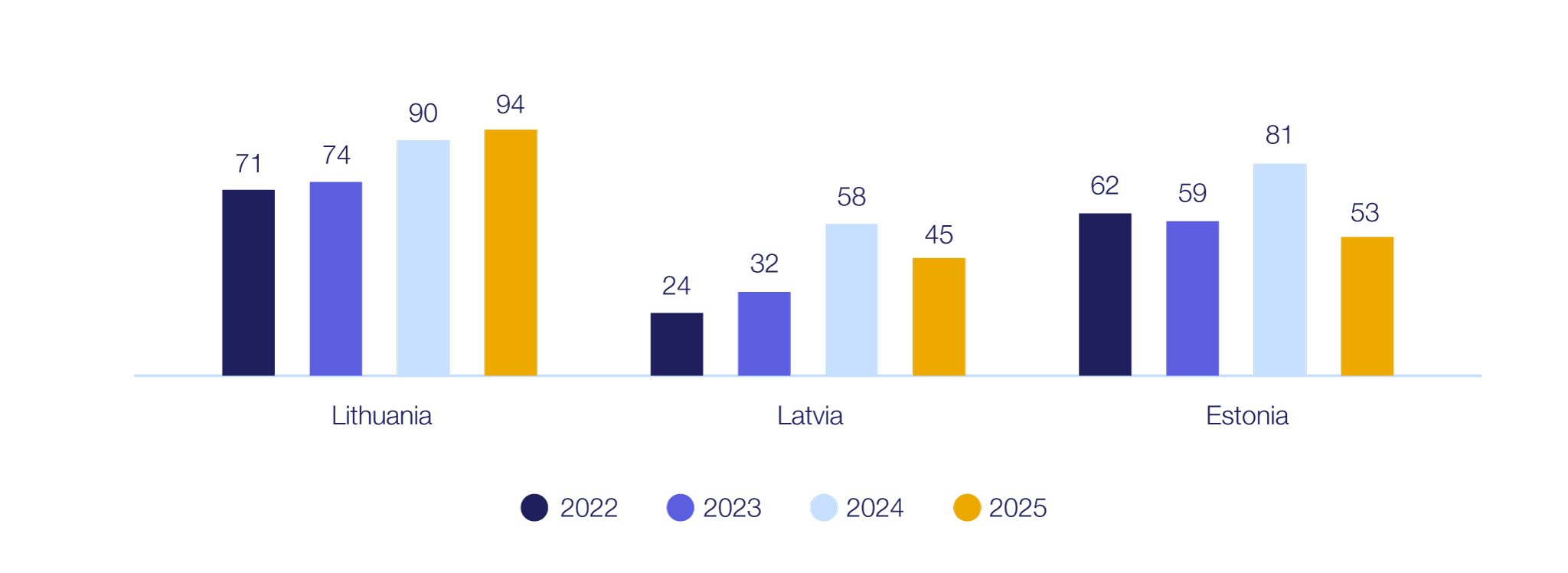
[6] The numbers for 2024 and 2025 include the transactions announced during 1 January – 10 December each year, i.e. not a full year.
Source: Mergermarket
Lithuania: steady growth in deal numbers continues
The largest Baltic economy, Lithuania, continues demonstrating strong economic development (with forecasted GDP growth of 2.7% in 2025) which has fed the steady M&A deal count growth over the last four years. With 94 deals announced by 10 December, Lithuania’s total nearly equals those of Latvia and Estonia combined (98).
With a well-diversified economy where growth is projected to accelerate next year, Lithuania continues to attract investors across a wide mix of sectors. In addition to two major deals featured in the 2025 top ten deals table, there was also EUR 30 million in fundraising from Lithuanian startup Nexos.ai[7], EUR 95.47 million in fundraising from US/Lithuania-based Cast AI (both of which develop AI-driven solutions – perhaps Lithuania will catch the global AI wave?) and more investments are expected in the rapidly growing tech startup sector. Going forwards, investors are likely to keep their eyes on Lithuania’s high-tech sectors, especially fintech, cybersecurity and biotechnology. Record levels of public investment in defence and infrastructure projects in the country may attract investments into Lithuanian construction companies and related segments. It is difficult to forecast whether the expected withdrawals of funds from the Lithuanian private pension system (starting in 2026 1Q) will increase the capital available for M&A activity or vice versa.
[7] This deal is yet to be credited in the Mergermarket database, thus not showing in the Top 10 deals list.
Latvia: strong growth in high-value deals
Despite a certain decline in transaction numbers in 2025 (still subject to final figures), following consistent growth between 2022 and 2024, the Latvian M&A market demonstrated increased strength and maturity by attracting the largest Baltic deals.
After several years of comparatively less favourable performance relative to its Baltic neighbours, Latvia reasserted itself in 2025 as a leading hub for high-value M&A activity. As many as six of the top ten Baltic deals by value had Latvia as the dominant geography; by contrast, Lithuania and Estonia each had only two of the top deals. All of the four above-mentioned Baltic “mega deals” involved Latvia either as the country where the target company’s operations were most extensive (Rimi Baltic; Södra forest holdings; and Food Union, the value of which has not yet been disclosed) or involved Latvia among three covered Baltic countries (the Tele2 towers deal). We also saw sizeable investments in Latvian startup and scale-up companies (including three of the top ten deals). This represents a clear shift from 2024, when the Latvian M&A market was characterised by higher deal volumes but materially lower transaction values.
From a sectoral perspective, Latvia is mirroring broader Baltic M&A trends, with the IT, consumer, services and energy sectors remaining the most active. In addition, the defence sector is gaining increasing prominence (a notable deal this year was the sale of ammunition producer Ammunity to Scandinavian Astor Group) and is expected to strengthen further in 2026.
Looking forward to 2026, the forecasted steady growth of the Latvian economy is expected to support strong M&A activity, and hopefully to attract more landmark transactions in the year ahead as well. Among these prospective larger deals may be the Latvian government’s plan to buy out Telia’s telecom companies in Latvia, LMT and Tet, aiming to attract strategic investors as well.
Estonia: transaction market shows resilience amid shifting dynamics
Although the number of deals in Estonia fell in 2025, the country remains an important player in the Baltic transaction landscape. Local capital is playing a bigger role alongside foreign investors, particularly in the startup field and through international expansion by Estonian companies such as Ridango, Sunly and Bolt. This marks a notable shift towards a more balanced investment environment.
Startup fundraising in Estonia remains active, even as average ticket sizes have moderated. Significant rounds have included Pactum AI (EUR 47 million), Blackwall (EUR 45 million), and Starship (EUR 43 million), underscoring that investors’ appetite for innovative technology ventures is recovering, as well as Estonia’s reputation as a digital leader.
Looking ahead, the government’s plan to inject additional borrowing into the economy is expected to support growth and drive transactional activity in the coming years, reinforcing Estonia’s position as a dynamic and resilient market within the Baltics.
Conclusions and outlook for 2026
The outlook for the Baltic M&A market in 2026 is positive. Projected accelerating growth in GDP in all three countries should underpin investor confidence and support strong M&A activity. The record investments by Baltic governments in defence and related infrastructure, as well as growing hopes that the war in Ukraine may pause in 2026, may catalyse dealmaking even further. Availability of capital for acquisition strategies is likely to improve due to developing corporate bond markets across the Baltics. We will probably not see as many mega deals as during this exceptional year, but Baltic companies and startups will continue attracting sizable investments from both foreign and local investors.
Our team stands out as the clear M&A leader
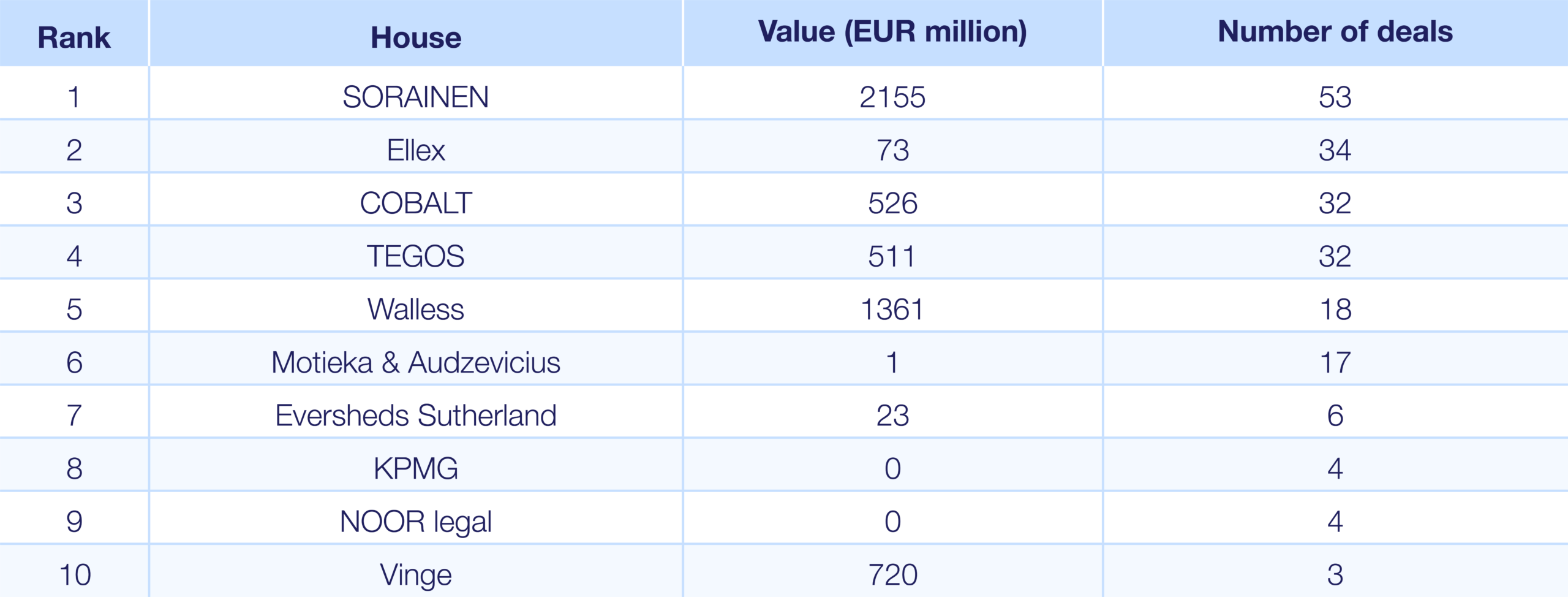
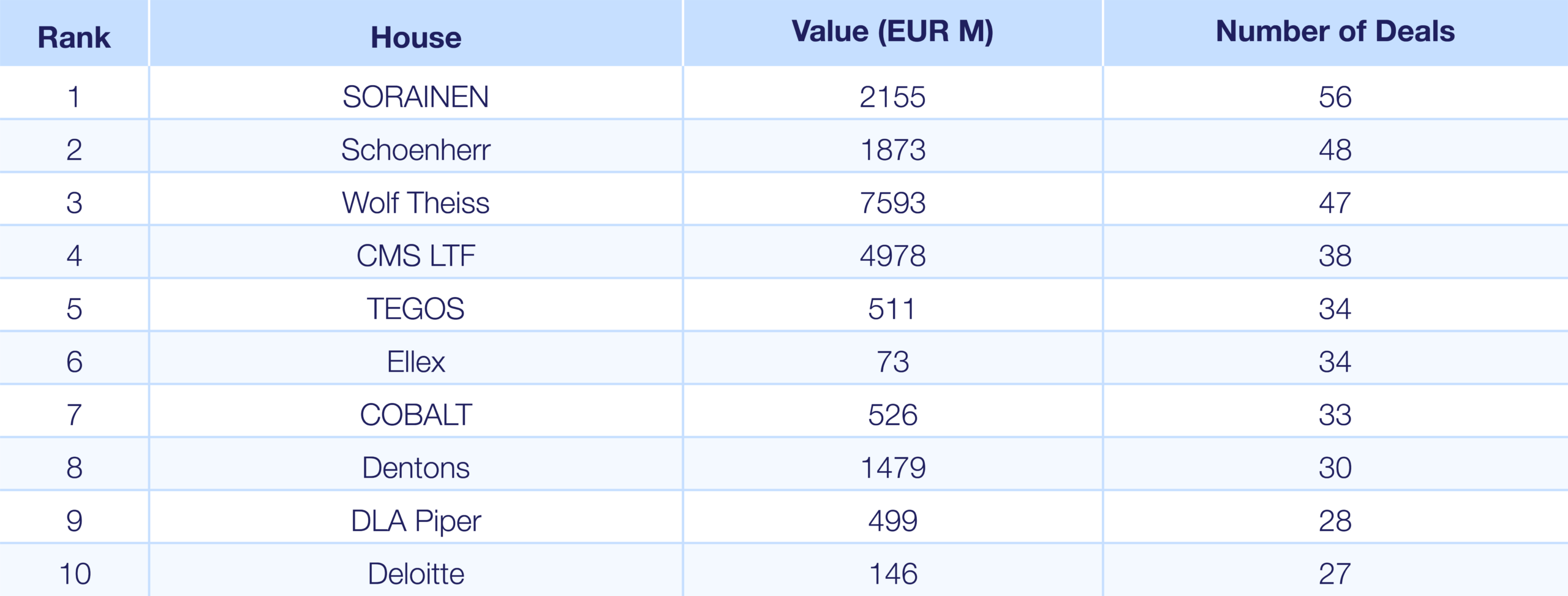
Sorainen stood out as the clear leader in the Baltic M&A legal league table this year, being 56% above the second player by total deal count and as much as 94% above the total value of those that are in second, third and fourth place combined. We were privileged to advise the parties in three of the four Baltic “mega deals” noted above. On the back of solid results in the Baltic market, this year Sorainen also leads the legal league table for the wider CEE region[8].
[8] The below tables are based on the Mergermarket data for 1 January – 10 December 2025.
Top Law Firms by advised deals in Baltics and CEE region in 2025
Top 10 Law Firms by advised deals in Baltics in 2025
Top 10 Law Firms by advised deals in CEE in 2025
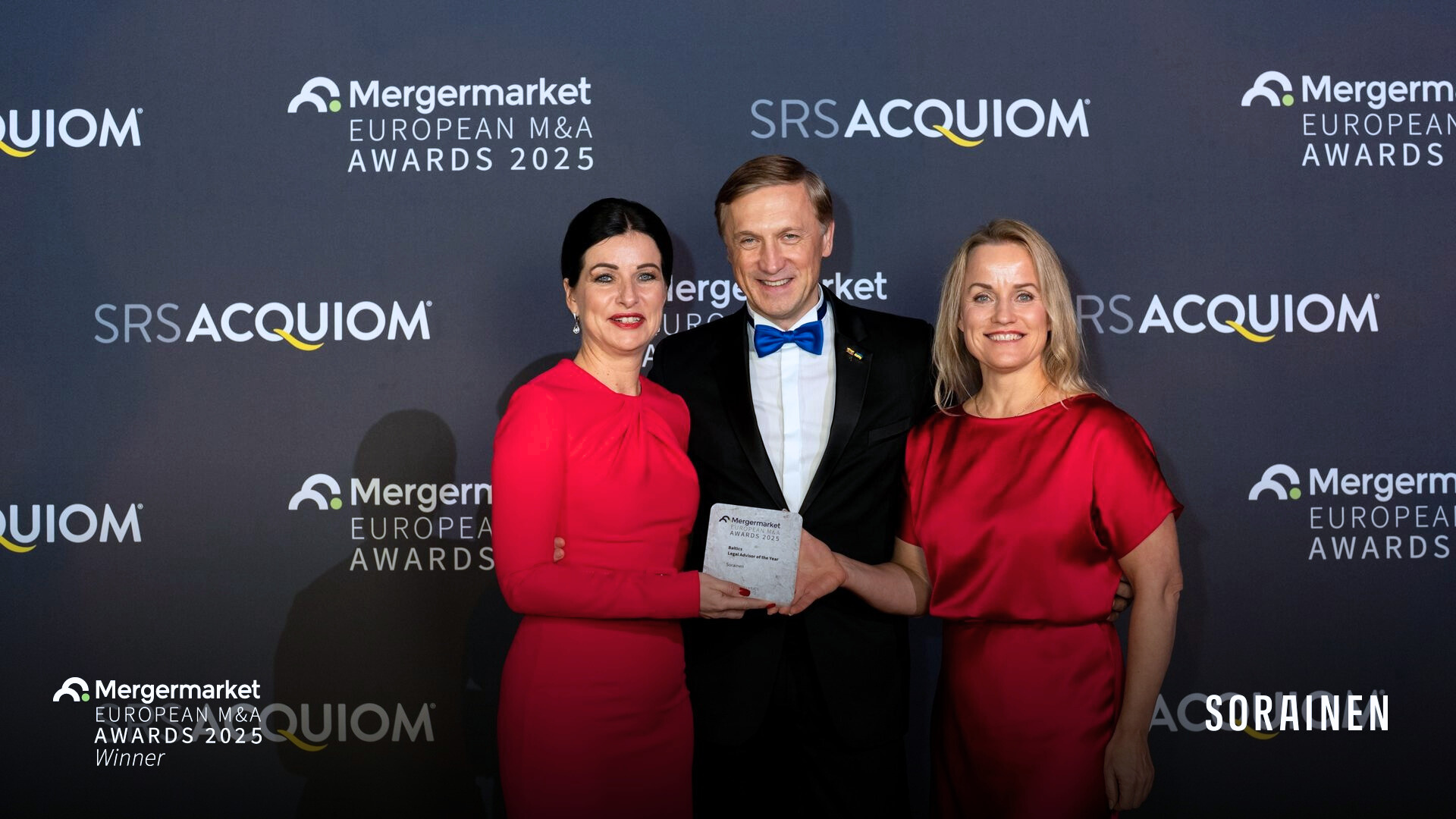
Due to our exceptional performance in 2025, both in terms of advised deal count and deal values, our advisory work has received notable market recognition:
- Sorainen has been recognised as both “Baltic M&A Legal Adviser of the Year” and “CEE M&A Legal Adviser of the Year” by the Mergermarket European M&A Awards 2025. Read more
- At the inaugural Legal 500 Central and Eastern Europe Awards 2025, Sorainen received three awards, including the “CEE Commercial, Corporate and M&A Firm of the Year”. Read more
Contact us
Contact our international M&A and private equity experts should you need advice on any legal or tax issues related to transactions or anything else:
- Laimonas Skibarka, Mantas Petkevičius, Sergej Butov and Evaldas Dūdonis in Lithuania
- Nauris Grigals, Jānis Līkops and Eva Berlaus in Latvia
- Toomas Prangli, Piret Jesse and Mirell Prosa in Estonia