Estonia
Supreme Court draws a line: music used during training sessions needs licensing
The Estonian Supreme Court has upheld a lower court ruling requiring a dance school to pay licensing fees for the public playing performance of music during paid training sessions for adults. The court clarified that the use of copyright-protected music in such settings constitutes public playing of recording and requires authorisation from the Estonian Authors’ Society (EAS), as well as separate permissions for performers and phonogram producers.
The ruling confirms that this obligation applies regardless of whether original tracks, adapted versions, or “concept training” formats (e.g. Zumba) are used. Even where instructors hold platform-based licenses, the training provider must independently secure the necessary copyright licenses. The court also emphasised that commercial training providers generally cannot rely on educational exceptions.
In parallel, EAS, together with related organisations, has issued new guidance for the use of music in the sports sector, outlining when licences are required and how to ensure compliance. The case highlights the importance of proper licensing to ensure fair remuneration for rights holders and equal competition in the market. The court decision is available in Estonian here.
Estonia to implement EU-wide protection for geographical indications of non-agricultural products
Estonia is preparing legislative amendments to implement EU Regulation 2023/2411, which establishes a unified system of geographical indication (GI) protection for craft and industrial products across the EU. Traditionally limited to agricultural goods and beverages, GI protection will now extend to non-agricultural products, safeguarding names, quality and traditional know-how linked to specific regions.
Geographical indications do not grant exclusive rights to a single producer. Instead, all producers operating within the designated region and meeting the relevant criteria may use the protected name, while others are excluded. The new framework enables producers to obtain EU-wide protection through a single application, increasing product value, facilitating market access and preventing misuse.
The reform will allow protection for Estonian products such as Haapsalu medicinal mud, Muhu embroidery, and Seto lace. It is expected to strengthen consumer trust, support regional craftsmanship and promote economic development and job creation. The draft law is available in Estonian here.
Copyright dispute over Estonia’s Eurovision-winning song “Everybody” reaches Supreme Court
A long-running copyright dispute concerning the performance of “Everybody”, a song composed by Ivar Must with which Estonia won Eurovision in 2001, is set to reach the Estonian Supreme Court. The Estonian Film Institute (EFI) has announced its intention to challenge a Court of Appeal judgment that upheld an earlier decision awarding Must more than EUR 9,000 in damages and over EUR 10,000 in legal costs.
The case stems from the performance of “Everybody” at the Estonian Film and Television Awards gala, where the work was allegedly arranged and performed without the composer’s consent. A key issue in the proceedings has been whether copyright law protects authors only against creative modifications or against unauthorised alterations of any kind.
The Court of Appeal found that changes to the vocal arrangement, instrumentation and overall sound of the song altered the original work. It also held that incorporating a segment of another musical work into the performance infringed the author’s right to additions to and modifications of the work.
The forthcoming Supreme Court proceedings could provide important guidance on the extent of authors’ control over adaptations and altered performances of musical works under Estonian copyright law.
Sorainen discusses art, copyright and AI at Foto Tallinn 2026
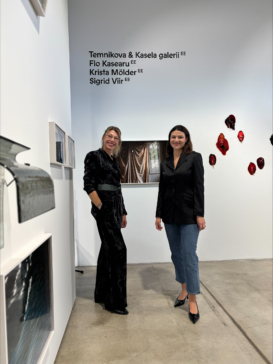
We were happy to support Foto Tallinn 2026 (18-20 September), Estonia’s only art fair, which brought together artists, galleries, collectors and art professionals from across the Baltics.
Representing Sorainen, Helery Maidlas and Kärt Anna Maire Kelder participated in discussions on intellectual property issues affecting the art market. They provided an overview of key copyright and IP considerations relevant to artists, collectors and other market participants.
In addition, Helery Maidlas led a seminar titled “Photography in the age of AI: Intellectual property rights & how to protect your work,” exploring the growing impact of artificial intelligence on copyright law and creative industries. The discussion highlighted the well-known “monkey selfie” case, in which U.S. courts found that photographs taken by a macaque could not be protected by copyright due to the absence of human authorship.
The seminar underscored a fundamental principle that is increasingly relevant in the AI era: copyright protection is tied to human creative input. As AI-generated content becomes more common, questions surrounding authorship, ownership and the protection of creative works continue to gain importance for artists, photographers and other creators.
Contact our expert in Estonia:
Olivia Kranich, Counsel

Latvia
Latvian Supreme Court clarifies evidentiary requirements for criminal trademark infringement cases
In a recent judgment, the Latvian Supreme Court overturned a regional court’s decision in a criminal case concerning the intentional use of counterfeit trademarks and remitted the case for retrial. The case involved a woman who had purchased and stored five jackets bearing counterfeit trademarks, two of which were sold during police-controlled test purchases.
In Latvia, the usual practice in criminal proceedings involving intellectual property (IP) infringements has been for the police to obtain an opinion from the trademark owner’s representative specifically to establish whether an infringement has occurred. However, in a recent judgment, the Supreme Court questioned this practice, finding that the lower court had failed to properly assess whether it could rely on an expert opinion provided by a person who also represented the trademark owner and might therefore have had an interest in the outcome of the proceedings. On retrial, the court must determine whether this potential conflict of interest affected the content of the opinion.
The Supreme Court also found that the regional court had failed to adequately justify its ruling, particularly regarding the valuation of the counterfeit goods, inconsistencies in the calculation of financial losses, and the substantial harm allegedly suffered by the trademark owner.
The judgment highlights important procedural requirements in criminal IP cases and demonstrates that IP infringement may also give rise to criminal liability. Under Latvian law, criminal liability may arise where an infringement causes substantial harm, which, in most cases, is assessed as having a threshold of 10 times the minimum monthly wage (EUR 7,800 in 2026). However, other substantial interests may also be taken into account when assessing whether substantial harm has occurred.
Latvian Supreme Court clarifies standards for customs IP enforcement
In Judgment No. SKA-73/2026, the Latvian Supreme Court held that customs authorities cannot confiscate and destroy goods solely on the basis of suspected IP infringement if the importer objects to such destruction. The dispute concerned toy cars with references and visual elements allegedly resembling Jeep vehicles and infringing trademarks and registered designs. Latvian customs authorities had ordered the confiscation and destruction of the goods after concluding that they infringed the rights holder’s intellectual property rights.
The Supreme Court emphasised that, under Regulation (EU) No 608/2013, simplified destruction of goods is only possible where both the rights holder and the importer (or declarant) agree, either expressly or by silence. Where the importer objects, customs authorities must carry out a full and objective assessment of whether an actual infringement has occurred. Suspicion alone, even when supported by risk analysis, is insufficient.
The court further clarified that, where the parties disagree, it is necessary to initiate proceedings to determine whether intellectual property rights have in fact been infringed. Importantly, the Supreme Court noted that “proceedings” within the meaning of Article 23 of Regulation (EU) No 608/2013 may include not only civil court proceedings, but also administrative or administrative offence proceedings conducted by the customs authority itself.
Latvia to rename the Patent Office to the Latvian Intellectual Property Office in 2027
On 29 September 2026, the Latvian Cabinet of Ministers approved a proposal to rename the Patent Office to the Latvian Intellectual Property Office (Latvijas Intelektuālā īpašuma birojs), effective from 1 January 2027. The change reflects the institution’s broader responsibilities beyond patents, including trademarks, designs and geographical indications.
Contact our expert in Latvia:
Linda Sarāne-Reneslāce, Partner

Lithuania
Pickled cucumbers, politics and trademarks
Ahead of last year’s parliamentary elections, Lithuania’s Central Electoral Commission found that a supermarket discount promotion for Geras vaizdelis (“Good Picture”) pickled cucumbers had amounted to covert political advertising, benefiting the Peace Coalition, a party that had campaigned under the near-identical slogan “Geras vaizdelis visiems” ( “Good Picture for Everyone”).
The producer, the retailers involved, and a politician linked to the coalition challenged that decision in court.
A Lithuanian court has now overturned the election authority’s decision, ruling that the promotion did not qualify as political advertising.
A key fact explaining that conclusion: the trademark “Geras vaizdelis,” owned by Kėdainių konservų fabrikas (Kėdainiai Canning Factory), was registered back in 2002, and the product’s packaging had not been modified in any way during the period in question.
The court found that mere similarity between a product name and a political slogan was not enough to change the nature of a long-established brand. The use of the trademark remained as a normal commercial activity.
The case is a reminder that a long-standing, duly registered trademark is not just a branding asset: it can also serve as evidence of a company’s genuine unrelated commercial history if the trademark’s name happens to overlap with unrelated third-party messaging.
Preventative relief for copyright infringement
The Supreme Court of Lithuania explained how preventative action can be used to protect copyright.
A preventive action means asking the court to stop illegal actions before they cause damage. The person making the claim must prove two things: that the other person might break the law and that their doing so could cause damage.
The case concerned a claim by the copyright owner seeking to prevent a company from using copyrighted works without permission in the future. Although the company had stopped distributing the infringing materials, the court considered that the risk of future breaches remained and granted the claim.
This case demonstrates that preventative actions are an effective tool for protecting intellectual property rights. Copyright owners do not have to wait until a further infringement occurs. If there is a real risk of unauthorised use, they can ask the court to take preventative action in advance.
Lithuania plans to rename the State Patent Bureau to the Intellectual Property Office of Lithuania
The Lithuanian Government approved a draft law, prepared by the Ministry of Justice, that would rename the State Patent Bureau to the Intellectual Property Office of Lithuania.
The rebrand reflects the institution’s expanded role, which now goes far beyond patents to include the registration of trademarks, designs and geographical indications, as well as activities that promote awareness of intellectual property. The new name is intended to better represent the full scope of its work and its position within the innovation ecosystem.
The reform is not limited to a new name. As patent fees have not been updated since 2012, the draft law proposes increasing them, especially for patents in years 11 to 20 of their term – the period when patented inventions typically generate the most economic value for their owners. To support innovation, a fee discount will also be introduced for universities, research institutions, and small and medium-sized enterprises.
If approved by the parliament, the reform would mark an important step in modernising Lithuania’s intellectual property system.
IP Management Clinic and Startup Fair 2026
 On 17 September, the World Intellectual Property Organization (WIPO) and the State Patent Bureau of Lithuania wrapped up the six-month IP Management Clinic (IPMC) at Startup Fair 2026 in Vilnius.
The programme brought together 20 Lithuanian startups and SMEs with IP experts, helping them strengthen their approach to trademarks, patents, designs and trade secrets.
Throughout the programme, participants received tailored mentoring and practical training on topics ranging from IP strategy and protection to commercialisation, licensing and attracting investment.
Sorainen was proud to contribute to the initiative. Our patent attorney Marijus Dingilevskis served as a mentor, sharing practical insights on how businesses can protect and make the most of their intellectual property. We were also pleased to join the closing event and celebrate the participants’ achievements as they completed the programme with stronger IP strategies.
Contact our expert in Lithuania:
Marijus Dingilevskis, Senior Associate
marijus.dingilevskis@sorainen.com

Our international Intellectual Property team is at your disposal, should you need advice on any legal issues you are facing.
Subscribe here if you would like to receive newsletters and invitations to webinars and offline events.