Summer is around the corner and with it comes not just longer days and new adventures, but also the perfect moment to take stock of what matters most – an opportunity to reflect on long-term priorities.
In this edition, we bring you the latest developments shaping the world of family business succession, private wealth, sports law and beyond.
Here’s what’s inside:
- New heavyweights Dr Mindaugas Lukas, Dr Aistė Medelienė and Sven Papp join our team – bolstering our private client advisory like never before.
- Highlights from a recent asset management panel from the perspective of startup top founders and investors.
- A landmark ruling on protecting young athletes – and what it means for sportsmen’s’ contracts.
- Practical tips for getting succession planning right.
Two new tax partners uniting private wealth, disputes and cross-border tax expertise

In the middle of April, we welcomed two experienced tax partners – Dr Mindaugas Lukas and attorneys-at-law Dr Aistė Medelienė as partners. They combined expertise significantly enhances the firm’s ability to advise individuals, families, and business owners on complex tax matters across jurisdictions.
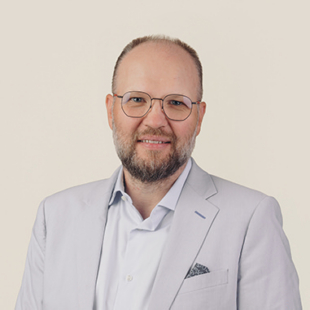
Dr Mindaugas Lukas
Mindaugas brings over two decades of experience advising private clients and entrepreneurs on tax disputes, transaction structuring, and private wealth planning. His practice focuses on helping individuals navigate complex national and international tax environments, including asset structuring, succession planning, and risk management in cross‑border situations.
Mindaugas is particularly valued for his ability to combine deep technical tax knowledge with an understanding of clients’ broader personal and business objectives, enabling him to deliver practical and forward‑looking advice in periods of regulatory change and uncertainty.
“In a time of increasing tax complexity, private clients need advice that is both technically precise and strategically sound. Sorainen offers a platform where this depth of expertise is supported by a strong regional perspective, which is essential for protecting and structuring private wealth across borders,” comments Mindaugas.
Dr Aistė Medelienė
Aistė has more than 20 years of experience in tax and customs law, with a strong focus on high‑stakes and high‑complexity matters affecting private clients. Her work combines strategic tax advisory, private wealth structuring and the resolution of complex tax disputes, often involving significant personal assets and cross‑border elements.
Aistė’s 11‑year tenure as a tax arbiter at the Commission on Tax Disputes, followed by over 15 years advising and representing clients, has given her deep insight into tax administration, risk assessment, and dispute prevention. This perspective allows her to help private clients anticipate tax risks early and find sustainable solutions in the most sensitive and sophisticated situations.
“Together with my colleagues, we bring strong experience in transactions, tax and customs advisory, private wealth, and tax disputes. This allows us to support private clients not only in planning and structuring, but also when complex issues require decisive action,” says Aistė.
Market recognition
Both Mindaugas Lukas and Aistė Medelienė are consistently recognised among the leading tax experts in Lithuania by international legal directories, including Chambers and Partners, Legal 500 and ITR World Tax, reflecting their long‑standing reputation among both private and institutional clients. Mindaugas is also ranked Band 1 for Private Wealth Law in Lithuania by Chambers and Partners.
One of Estonia’s most recognised and experienced advisers with strong private client expertise, Sven Papp, joins Sorainen’s partnership

Sven Papp, one of Estonia’s most recognised and experienced advisers, has joined Sorainen as a partner. Alongside his role as co-head of the Mergers & Acquisitions (M&A) and Corporate and Employment Law teams, Sven’s arrival significantly strengthens the firm’s private client advisory capabilities.
With his extensive experience advising founders, entrepreneurs and high-net-worth individuals, Sven enhances Sorainen’s ability to support clients not only in complex transactions but also in structuring, protecting and transferring private wealth across generations.
“We are excited about Sven’s ability to contribute to our Private Clients sector group, where his extensive experience will reinforce Sorainen as the go-to adviser for families and high-net-worth individuals in the Baltic region,” said Eva Berlaus, Sorainen Managing Partner.
“The addition of such exceptional expertise opens up new opportunities for Sorainen, strengthens our team and accelerates our growth. With Sven’s support, we will be able to assist our clients even more comprehensively in M&A transactions, corporate law matters and private client advisory work,” said Toomas Prangli, M&A, corporate and employment teams partner.
What does Sven’s appointment mean for our clients?
- Top-tier private client advisory. Sven has extensive experience advising entrepreneurs, founders and high-net-worth individuals on ownership structuring, succession planning and governance. He combines technical legal knowledge with a practical understanding of how personal and business interests interact, helping clients preserve and grow their wealth over the long term.
- Seamless support across business and personal matters. With a background in high-value transactions and corporate advisory, Sven is uniquely positioned to guide clients through situations where private wealth and business decisions intersect, from exits and acquisitions to long-term asset structuring.
- International perspective. Sven has worked at the New York and Stockholm offices of White & Case, at strategic consultancy SIAR-Bossard in Stockholm, and as General Counsel of Swedish Match East Europe based in Stockholm. This experience allows him to advise clients on cross-border matters with a global outlook.
Personal Asset Management of Founders and Investors: a recap
In January, Sorainen attended the 2026 sTARTUp Day. We invited investors and startup founders Triin Hertmann and Taavi Kotka, as well as investment strategist Rait Kondor from INVL, to share their know-how and experience regarding their takes on how founders and investors can mitigate risks in managing their personal assets in the startup economy. The panel was moderated by Hanna Esko.

Main takeaways of the conversation:
- Startup investments should generally be capped at around 10–20% of a person’s total portfolio, and only if the overall net worth is high enough and the rest of the assets are well diversified (index funds, real estate, etc.).
- Angel and startup investing outcomes are highly driven by luck and concentration of returns (one big winner can define the whole portfolio), which makes broad diversification or using VC/index-style vehicles critical to manage risk.
- For founders, governance and personal risk management matter as much as picking startups: plan co‑founder breakups and secondaries early, avoid ‘dead equity’ on the cap table, keep some wealth in low‑risk assets, and recognise how investor behaviour (down rounds, veto rights) can impact outcomes.
The panel highlighted that, as in many business areas, personal risk management for founders involves planning for unexpected absences, such as health issues or death, to ensure business continuity and decision-making authority. Some specific tools mentioned were clear co-founder agreements, including early planning for breakups and secondaries to manage equity. Founders are advised to keep some wealth in low-risk assets as a backup.
A challenge to address is the risk that arises if a founder is incapacitated or dies, leading to their heirs, such as their parents or underage children, inheriting shares. In a startup set-up, neither outcome is likely to be wished for, as the shareholders play a crucial personal role in the growing success of the company , and outsiders would cause delays in decision processes going forward. For this reason, institutional investors often require clauses in shareholder agreements for instant buyouts or moving such heirs to a passive investor list. Although first sights of such requirements go back circa 20 years, they are still not widespread.
Even in case there is a plan in place for buyout of heirs, some flexibility in the agreement may provide necessary, for an example, to extend the buy-out period because the company is not ready to make a lump-sum payment without going bankrupt, should the unfortunate event roll around earlier than expected.
On the investment front, the panel discussion highlighted the importance of diversification, with startups comprising no more than 10-20% of a portfolio. Taavi Kotka emphasised the need for a minimum net asset value of $2 million for startup investments. Triin Hertmann noted that venture capital funds averaged a 12.8% return over 15 years, with high variance. The panellists discussed the risks of founder conflicts and the importance of clear equity plans. They also stressed the value of investing in startups, which contributed 18% to Estonia’s GDP last year, despite the high risks involved.
The full panel can be revisited here.
The athlete’s relationship with their manager: should young athletes be protected as consumers?
Heidi Rand-Karu, Polina Tšernjak
A recent ruling by the European Court of Justice sheds light on a topical issue – whether a minor star athlete is a consumer when entering into a contract to support their development and career. And if so, does that hold up even if, after signing the contract, they become a professional athlete earning millions?
The answer to this question determines the young athlete’s rights and obligations. Generally speaking, a contract concluded and obligations undertaken must be fulfilled. However, if it transpires that the consumer is faced with unfair consequences arising from the contract, the consumer may seek protection under Estonian, Lithuanian, Latvian and European Union law. This means that if a young athlete is a consumer and a term of the contract concluded with them is unfair, the athlete may not have to share fruits of their future success with their manager or sponsor.
Background to the dispute: a promising athlete enters into a contract with an agency promising to share their future earnings
A young Latvian athlete signed a contract with an agency, under which the agency undertook to provide the athlete with services to support his development and career. For example, the agency was to provide the young athlete with training and coaching, sports medicine and sports psychology support, negotiate contracts between the athlete and clubs, market the athlete, and handle legal and accounting services. In return, the athlete undertook to pay the agency a fee over the next 15 years. The exact amount of the fee was left open, but it was to amount to 10% of the athlete’s total net income during the term of the contract, provided that this income amounted to at least EUR 1,500 per month.
A dispute arose between the athlete and the agency over the payment of the fee. The agency went to court to claim over EUR 1.6 million from the athlete. This sum was said to represent one-tenth of the athlete’s earnings over the 15-year period.
The Latvian courts of first instance dismissed the agency’s claim, finding that the contract breached Latvian consumer protection standards. In particular, the courts considered it unfair that the athlete was required to pay the agency 10% of the income earned during the term of the contract.
The courts of Member States have resolved similar issues in different ways. Whilst a court in Paris regarded the athlete as a consumer in such a situation, a court in Munich held that consumer protection rules do not apply to a contract between a young tennis player and a sports agency.
The Latvian Supreme Court was obliged to seek a binding opinion from the Court of Justice of the European Union to resolve the dispute. The Court of Justice was therefore required to provide an assessment that harmonises the case law of the European courts.
So where did the European Court of Justice land?
The European Court of Justice’s interpretation
The Court emphasised that consumer status is assessed at the time the contract is concluded. If the athlete was not engaged in professional sport at that time, they are a consumer – even if they later become world-famous and earn millions. Aspirations, knowledge of the sport or the purpose of the contract (career advancement) do not alter this assessment.
This means that early pressure from managers and sponsors to sign contracts does not exempt them from consumer protection rules. Although the managers’ motivation is understandable – an early contract is an investment that may prove profitable – this must not lead to the imposition of unfair terms.
What does the European Court of Justice’s ruling mean in practice?
In the world of sport, when signing contracts, it is important to seize the moment when a young talent has been discovered but has not yet reached the peak of their career. This is particularly the case when a manager, agency or sponsor sees great potential in a young talent and wants to secure a contract before others do. It is also important for the athlete to find sponsors and finalise agreements with them as quickly as possible, so that they can reach greater heights and go further more quickly with additional support. It is precisely in such situations that contracts tend to be concluded rather hastily and, for the athlete, as a new and opaque experience.
However, the logic of consumer protection is strict: if a contract between an athlete and a sponsor or manager contains even partially unclear terms (i.e. if the actual content of a term is not fully understandable upon reading the contract), those terms may be void in Estonia and elsewhere in the European Union. The result of such an agreement may be that the manager or sponsor is deprived of funds or the promised consideration.
If the contract specifies percentages of future income or a vague obligation to ‘represent the sponsor in appropriate ways’, the athlete and their parents may not actually understand what they are signing up to. Later, once the career has taken off, it may become clear that these clauses are invalid, because they were not sufficiently clear or comprehensible.
This is precisely why it is in the sponsor’s and the manager’s own interests to explain the contract in simple, clear language and to set out these same explanations in writing in the contract. Not in business jargon, but in such a way that even a 15-year-old athlete and their parent can understand what it means, for example, to pay a fee only ‘in the event of success’ or why the contract remains valid even after the athlete’s career has ended. The best insurance policy against future disputes is simple: all important explanations are put in writing.
Under Estonian law, there is an additional hurdle for contracts involving underage athletes. Certain agreements – particularly those imposing long-term or financially significant obligations on the child – cannot be entered into by parents without court authorisation. If this permission is not obtained, the athlete may, years later, quite legally say: ‘I am not obliged to fulfil this contract.’ And they are right. In such a situation, a sponsor or manager may discover that a carefully planned collaboration was, from the outset, built on shaky legal ground.
Under Lithuanian law, any contract concluded by a minor between the ages of 14 and 18 may be validly entered into only with the consent of their parents. However, unlike in Estonia, Lithuanian law does not establish any additional layer of judicial oversight, such as a requirement to obtain prior court approval. The Lithuanian Civil Code does set out specific categories of transactions for which court authorization is required (unless executed before a notary), yet none of these relate to the fact that a contract may entail potential long-term legal or financial consequences for the minor.
The only notable issue may arise where the contract contains an arbitration clause, which is frequently encountered in agreements of this nature. However, even in such cases a court would most likely limit the review of the contract to the arbitration clause itself. Nevertheless, sports contracts generally do not fall within the category of agreements requiring either court authorization or notarization, which means that, in practice, they are largely left without prior independent legal scrutiny.
Against this background, the ECJ judgment becomes particularly significant in situations where an athlete is especially vulnerable from a legal perspective, namely due to both youth and lack of experience. In Lithuania, there have already been several publicly discussed cases in which athletes who sought to terminate their contracts allegedly faced exceptionally burdensome financial consequences arising from highly unfair or even “predatory” contractual terms. While it remains unclear whether the athletes in those specific cases would fall within the ECJ’s notion of an “inexperienced minor athlete,” the very existence of this judgment draws increased attention to such situations and may, in the future, contribute to addressing similar disputes more effectively.
This may prove particularly relevant in the Lithuanian context, where unfair contractual terms can, under certain circumstances, be challenged on the basis of consumer protection principles. Accordingly, contractual provisions imposing disproportionate financial obligations or creating a significant imbalance between the parties’ rights and obligations may potentially be declared unenforceable following judicial review.
Under Latvian law, as in Lithuania, a minor aged 14 to 18 may enter into contracts only with their parents’ consent. There is no need for additional approvals from the court or other institutions.
Latvian courts strictly scrutinise consumer contracts for unfair terms. Particular red flags include unclear revenue‑sharing formulas, excessive duration or long post‑term commission tails, one‑sided termination, disproportionate penalties, vague or unmeasurable service obligations, broad assignment rights, and arbitration clauses that limit a consumer’s mandatory protections. The Latvian law permits any particular contractual clause to be declared unenforceable while the rest of the contract remains in force.
In summary, the European Court of Justice’s message is clear: a young athlete is a consumer if they were not acting as a professional sportsman or woman at the time the contract was signed. This approach protects young people from disproportionate pressure and unfair terms that could affect their careers for decades. At the same time, it calls on businesses entering into contracts with athletes to exercise greater care to ensure a return on their investment.
Original article (in Estonian) here.
How to pass on a business wisely: key considerations for succession planning (including Estonian legal aspects)
Kärt Anna Maire Kelder, Meri-Ly Karjus-Mustafayev
With a significant generational transfer of wealth already underway globally, the question of how to pass on a business has become more pressing than ever. In the United States alone, an estimated USD 30 trillion in assets is expected to pass from one generation to the next over the coming 20 years. Yet, despite the scale of this transition, many entrepreneurs postpone succession planning or approach it without sufficient foresight. This often results in complexity, disputes or even the fragmentation of a business that took decades to build.
Statistics show that in Europe, only 5-10% of family businesses survive into the third generation. This underscores a simple truth: successful succession does not happen by chance – it requires careful and timely planning. Critically, the earlier heirs are involved in the business, the greater the likelihood of a successful transition. Delaying this involvement not only limits the heirs’ preparedness but also increases the risk of misalignment between the founder’s vision and the future direction of the business.
Tip 1. Start early: succession is a process, not an event
One of the most common pitfalls is treating succession as a one-time legal step rather than an ongoing process. In practice, effective succession planning should begin well in advance and evolve over time. It involves not only legal structuring but also preparing heirs, clarifying roles, and aligning expectations.
Early planning allows business owners to retain control over key decisions while there is still time to test structures, communicate intentions and adjust arrangements where needed.
Importantly, early planning should include actively involving heirs in the business itself – not just in legal documentation. Heirs who understand the company’s operations, values, and relationships are far better equipped to take on leadership roles when the time comes. This gradual integration also allows business owners to identify potential successors, address skill gaps, and ensure that the next generation is genuinely prepared, rather than simply legally entitled, to continue the legacy.
Tip 2. Avoid uncertainty: the risks of no will or unclear arrangements
A recurring issue in practice arises when a business owner passes away without a will (meaning succession takes place in accordance with the law; in practice, it also means that there can be multiple heirs, which makes the management of the estate complicated) or with one that is incomplete or poorly adapted to their situation. Ambiguous wording is another issue. This often leads to delays in inheritance proceedings, leaving companies without a clear decision-maker during a critical period.
These challenges are even more pronounced in cross-border situations. Where assets are located in one country, but the applicable law is that of another, inconsistencies can create confusion and prolong the process due to the need to obtain an inheritance document in the format suitable in the country where the assets are located, getting the formalities right, etc. During this time, the absence of an active and recognised owner may affect both day-to-day management and strategic decision-making.
Well-structured succession planning helps ensure continuity and avoids unnecessary disruptions. It is important to leave no room for interpretation – legacies should be structured in a clear and direct manner. Equally, the will and the legacies within it should be practical and workable in reality (for example, consideration should be given to whether the intended beneficiary is legally and practically able to hold the assets in question; e.g. is the charity actually a good candidate to inherit shares).
“If there are good, active and well-thought-out relationships with the local management, tensions can be avoided. However, if the relationships are unclear, or if the heirs have never even met the company’s management or visited Estonia, then disagreements are virtually guaranteed,” says Kärt Anna Maire Kelder, the counsel at Sorainen.
Tip 3. Think beyond equal distribution
While it may seem intuitive to divide assets equally among heirs, this approach can create significant practical difficulties, particularly when it comes to active business assets.
Equal ownership only works where heirs are equally willing and able to contribute to the business. In reality, this is rarely the case. Differences in interest, capability or financial needs often lead to tension. Over time, buyouts or restructuring may become necessary, and disagreements frequently arise around valuation and fairness.
A thoughtful succession plan considers not just equality, but also functionality and sustainability of the business.
Tip 4. Consider the implications of minor heirs
Another frequently overlooked aspect is the involvement of minor children as heirs. While leaving assets to children may seem straightforward, the legal reality is more complex. As a general rule, transactions involving a child’s property require court approval.
In a business context, this can create significant administrative burdens. Routine actions – such as approving financial statements or entering into transactions – may become subject to procedural delays. Where assets or operations span multiple jurisdictions, the complexity increases further.
Planning ahead allows for structures that protect the interests of minors while preserving the company’s operational flexibility.
Tip 5. Do not overlook matrimonial property issues
Succession planning is closely linked to matrimonial property regimes. In many cases, entrepreneurs have not fully considered how marital property rules may affect the ownership and control of business assets.
If a jointness of property regime is chosen as the marital property regime, it must be taken into account that the testator’s ability to decide on the succession of assets is limited – as a rule, they can only dispose of their notional share, i.e. typically 50% of the joint property. This also means that, after the opening of the succession, the matrimonial property must first be divided before the estate itself can be distributed.
It should also be considered that in the case of marriage, the spouse is a statutory heir and may inherit a share of the estate, unless otherwise provided by a will or another arrangement.
A comprehensive approach to succession should therefore align inheritance planning with matrimonial property arrangements.
Tip 6. Ensure transparency and informed decisions
In situations where heirs renounce their share of an estate, disputes can arise later if they feel they were not fully informed about the value or scope of the assets. Courts are generally reluctant to overturn such decisions retrospectively.
This highlights the importance of transparency. Clear communication, proper valuation and well-documented decisions help mitigate the risk of future challenges.
Tip 7. Align legal planning with relationships
Finally, even the best legal framework cannot fully compensate for weak relationships. Where heirs have little contact with the business or its management, misunderstandings and conflicts are more likely.
Conversely, when there is trust, familiarity and open communication between founders, heirs and management, the transition is significantly smoother. Succession planning should therefore also include efforts to involve the next generation and build these relationships over time.
Our international Private Client team is at your disposal, should you need advice on any legal issues you are facing.
Subscribe here if you would like to receive newsletters and invitations to webinars and offline events.
Contact our experts:

Partner, head of Private Client team,
Lithuania
laimonas.skibarka@sorainen.com
Partner, Latvia

Partner, Estonia